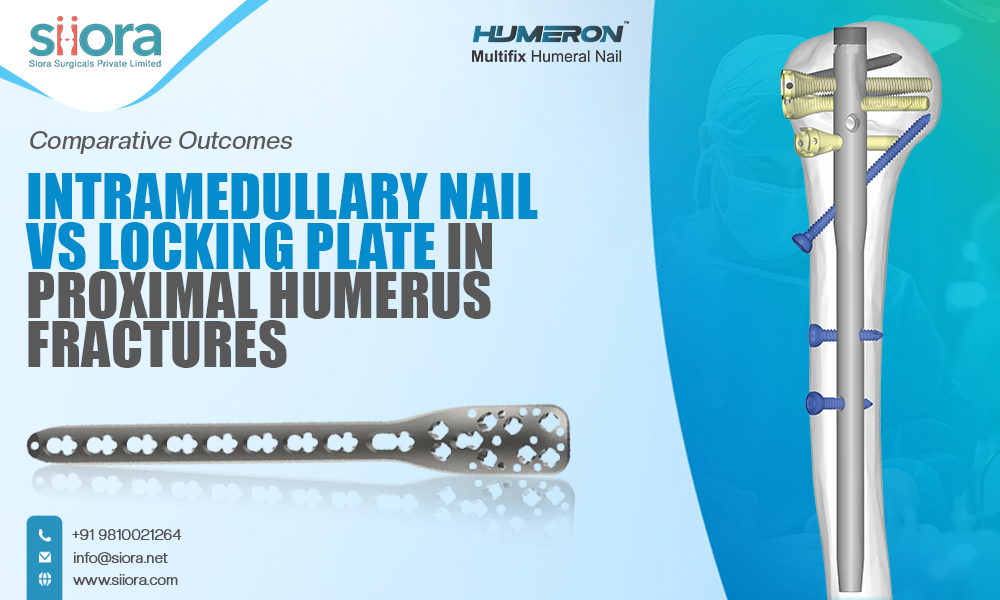
Breaking the upper arm bone near the shoulder—what doctors call a proximal humerus fracture—is something that happens quite often, especially if you’re older or have had a fall. When surgery is on the table, surgeons usually pick between two main tools: the humeral intramedullary nail, which is like a sturdy metal rod inside the bone, or the locking plate, a metal plate on the outside held tight with screws. Both do their job stabilizing the bone, but which one really comes out on top? Let’s talk about what patients and doctors have found.
What’s the Difference Between These Two?
The intramedullary nail goes snugly inside the bone’s hollow center. Surgeons often like this because they can get the job done through smaller cuts, which means less fuss around the muscle and skin.
Locking plates get attached right on the bone’s surface, with screws that lock in place to keep everything steady. This method shines when the break is complicated or the bone is shattered into bits.
How’s the Recovery?
In terms of getting your shoulder moving again and regaining strength, studies say the difference isn’t night and day. Plates sometimes give a bit quicker strength boost right after surgery, but a year down the road, folks with either fix tend to be neck and neck.
Surgeons note that the nailing usually takes less time, and folks tend to lose less blood during that surgery. Plates require a bigger opening to get the plate on, so it can mean a longer time under the knife.
What Could Go Wrong?
Every surgery has risks. With nails or plates, you could see issues like screws slipping, infections, or the bone not healing quite right. The good news? Both methods seem to bring about similar risks overall. Still, the type of fracture you have might make one choice safer or smarter than the other. For example, locking plates might do better with tricky, multi-piece breaks.
How Do They Decide?
There’s no one-size-fits-all answer here. Choosing between a nail and a plate depends on things like:
- How complex the fracture is: Messy breaks often call for plates.
- How strong your bones are: Older patients with fragile bones might do better with plates.
- What the surgeon is skilled at: Experience counts, and experts pick what they know best.
- What you want for recovery: Nails might let some people start moving sooner.
Wrapping It Up
Both intramedullary nails and locking plates have their perks and work well for fixing these shoulder-area breaks. Right now, the evidence shows neither completely beats the other in the long run. The best pick really depends on the exact break, your health, and which approach your surgeon feels confident about.
Siora Surgicals Pvt. Ltd. is one of the top orthopedic medical device companies in India, with a huge product inventory and a distributor base in 50+ countries.
 Site Title