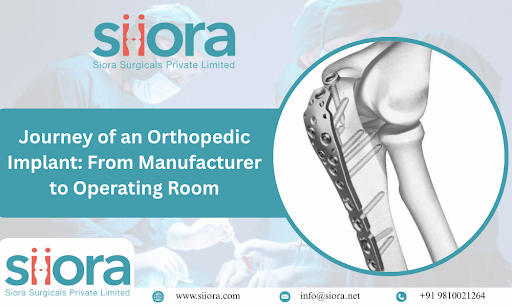
When we think about joint replacements or fracture repairs, we often focus on the surgeon or the procedure. But there’s a fascinating, behind-the-scenes journey that orthopedic implants undergo before they ever reach the sterile tray in an operating room. It’s a story of science, precision engineering, safety, and collaboration, all aimed at restoring mobility and quality of life.
Step 1: Innovation and Design
Every orthopedic implant starts with an idea, usually sparked by a real clinical challenge. Biomedical engineers, orthopedic surgeons, and researchers collaborate to design implants that are not only durable but also mimic the natural movement and function of bones and joints.
During this design phase, factors like body mechanics, biocompatibility, and longevity are considered. The materials used are often titanium alloys, stainless steel, or medical-grade polymers, which are chosen for their strength, corrosion resistance, and ability to integrate with human tissue.
Computer-aided design (CAD) tools and 3D modeling allow engineers to simulate how implants will behave under pressure and stress. Prototypes are tested and refined multiple times before they’re ever approved for production.
Step 2: Manufacturing with Precision
Once the design is finalized, the implant moves into manufacturing—a phase that blends high-tech machinery with strict quality control. Using CNC (Computer Numerical Control) machines, implants are carved with microscopic precision. Every curve, edge, and surface must meet exact specifications.
But it’s not just about shaping metal. These implants go through multiple finishing processes like polishing, coating, and cleaning. Surface treatments are often applied to promote bone growth once the implant is inside the body.
Each batch is subjected to rigorous testing, both mechanical and chemical, to ensure strength, durability, and sterility. Even the slightest flaw can result in rejection.
Step 3: Regulatory Approval and Certification
Before any implant can be used in a human body, it must pass through a maze of regulatory checks. Organizations like the FDA (in the U.S.), CE (in Europe), and CDSCO (in India) examine the data from clinical trials, manufacturing records, and safety tests.
This process is crucial because it ensures that every implant meets medical safety standards. Once approved, the implant is cleared for distribution.
Step 4: Sterilization and Packaging
Orthopedic implants are surgically placed inside the body, so they must be completely sterile. After manufacturing, implants are sterilized using methods like gamma radiation or ethylene oxide gas. These methods destroy any microbial life without damaging the implant materials.
Next comes packaging, another crucial step. Implants are sealed in sterile, tamper-proof containers designed to maintain sterility until the moment of surgery. Labels contain vital information: implant size, material, lot number, expiration date, and handling instructions.
Step 5: Logistics and Hospital Delivery
Implants then travel from warehouses to hospitals and surgical centers. Specialized logistics providers handle the transportation, maintaining ideal environmental conditions along the way.
Inventory management plays a big role here. Hospitals work with suppliers to ensure they have the right implants available when surgeries are scheduled. Some systems even use AI to predict demand based on surgical trends and patient data.
Step 6: Inside the Operating Room
Finally, the big moment arrives. In the operating room, the implant is unpacked under sterile conditions and handed to the surgical team. The surgeon positions it with utmost care, guided by pre-surgical planning and real-time imaging tools.
While this step might seem like the end, it’s really the beginning for the patient. A well-placed implant can restore function, relieve pain, and give someone a new lease of life.
The Human Touch
Behind every orthopedic implant is a network of engineers, scientists, regulatory professionals, and healthcare providers, all working toward a shared goal: helping people move again. From conception to the OR table, the journey is driven by a commitment to quality, safety, and, ultimately, human well-being.
It’s more than metal and plastic, it’s mobility, freedom, and hope, manufactured with care.
Check out the inventory of Siora Surgicals Pvt. Ltd. to get an international standard range of orthopedic implants in Dubai or anywhere else across the globe. Based in India, the company also offers quality OEM service globally.
 Site Title