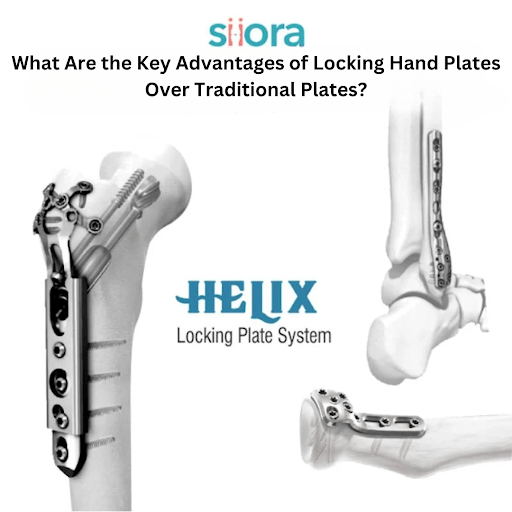
Orthopedic surgery has come a long way, and one of the biggest advancements in fracture fixation is the use of locking plates. When it comes to hand fractures, orthopedic locking hand plates have become the preferred choice over traditional plates. But what makes them so special? Let’s dive into the key advantages of hand locking plates and why they are revolutionizing the field of hand surgery.
Why Locking Hand Plates are Better Than Traditional Plates?
Superior Stability and Fixation
One of the most significant benefits of locking hand plates is their superior stability. Unlike traditional plates that rely on compression between the bone and plate for fixation, locking plates have screws that lock directly into the plate. This design minimizes micro-movement at the fracture site, reducing the risk of screw loosening and improving overall fracture stability. The enhanced fixation is particularly beneficial for small and delicate bones in the hand, where precise stabilization is critical.
Reduced Risk of Bone Resorption and Loss
With traditional plating systems, excessive pressure on the bone can lead to bone resorption (the breakdown of bone tissue). This happens because conventional plates compress the bone to hold it in place. Over time, this pressure can interfere with blood supply, leading to complications such as delayed healing or nonunion. Locking plates, on the other hand, do not require compression, preserving the bone’s vascular supply and reducing the risk of resorption.
Improved Healing and Faster Recovery
Locking plates provide a more stable environment for bone healing, which can lead to faster recovery times. The secure fixation minimizes movement at the fracture site, allowing the bone to heal more efficiently. Additionally, since these plates do not rely on bone compression, they reduce stress shielding, ensuring that the bone maintains its strength throughout the healing process.
Better Performance in Osteoporotic Bone
Patients with osteoporosis often face challenges with traditional plates because their bones are weaker and more prone to fractures. Traditional screws depend on bone quality to maintain their grip, which can be problematic in osteoporotic bones. Locking plates, however, provide an independent locking mechanism, ensuring that the screws stay secure regardless of bone density. This makes them an ideal choice for elderly patients or those with weakened bones.
Lower Risk of Implant Failure
Traditional plates rely heavily on friction between the plate and the bone to remain stable. Over time, repeated stress can cause the screws to loosen or back out, increasing the risk of implant failure. Locking plates eliminate this risk by securely locking the screws into the plate itself. This feature not only enhances durability but also minimizes the likelihood of complications that may require revision surgery.
Minimized Soft Tissue Damage
Locking hand plates are designed to be more anatomically contoured, which means they fit the natural shape of the bone more effectively. This reduces the need for excessive surgical manipulation and helps preserve the surrounding soft tissue. Less soft tissue damage means reduced post-operative pain, faster healing, and a lower risk of complications such as infections or tendon irritation.
Versatility and Customization
Locking hand fracture plates are available in various designs, sizes, and configurations to suit different fracture types and patient needs. Surgeons can choose from pre-contoured plates that match the specific anatomy of the hand, providing a better fit and improved fixation. This versatility allows for more personalized treatment approaches, leading to better surgical outcomes.
Enhanced Biomechanical Properties
Biomechanics plays a crucial role in fracture healing. Locking hand plates creates a fixed-angle construct, which significantly improves the mechanical stability of the repair. This fixed-angle design prevents secondary displacement of the fracture, ensuring that the bone heals in the correct alignment. Moreover, the load distribution in locking plates is more uniform, reducing stress concentration points that could lead to implant failure.
Final Thoughts
The orthopedic locking hand system has transformed the way hand fractures are treated. With superior stability, reduced complications, and enhanced healing potential, they offer clear advantages over traditional plates. Whether it’s better performance in osteoporotic bone, minimizing soft tissue damage, or faster recovery times, the benefits of locking hand plates are undeniable. As medical technology continues to evolve, these innovative implants will likely become the standard in hand fracture treatment, ensuring better outcomes for patients worldwide.Siora Surgicals Pvt. Ltd. is a leader in manufacturing and supplying a CE-certified range of locking hand fracture implants and other orthopedic devices. With a presence in over 50 countries, the company is also looking to establish itself as a trustworthy supplier of orthopedic devices in USA.
 Site Title